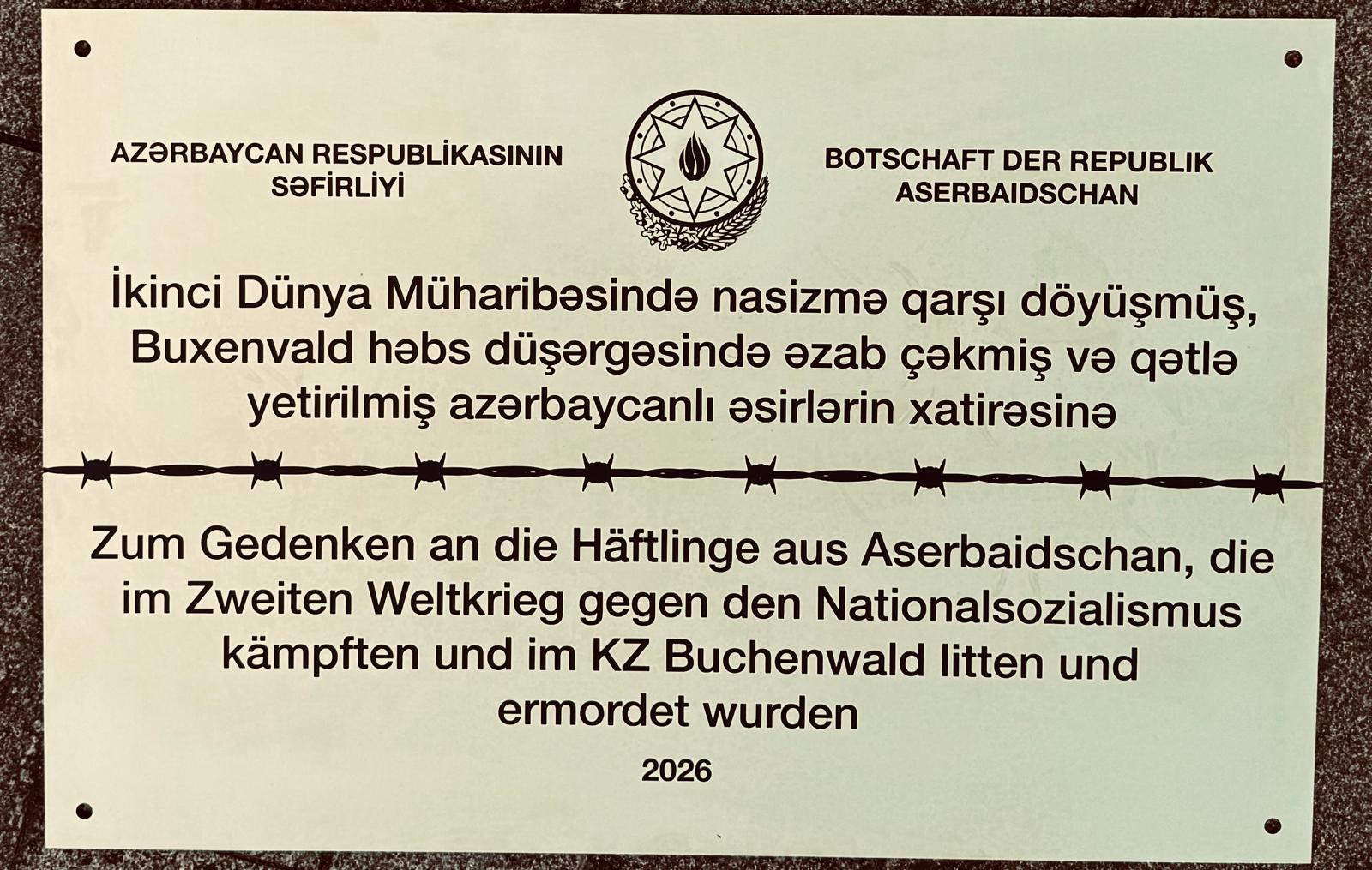
A memorial plaque for Azerbaijani prisoners of war unveiled at the former Buchenwald concentration camp
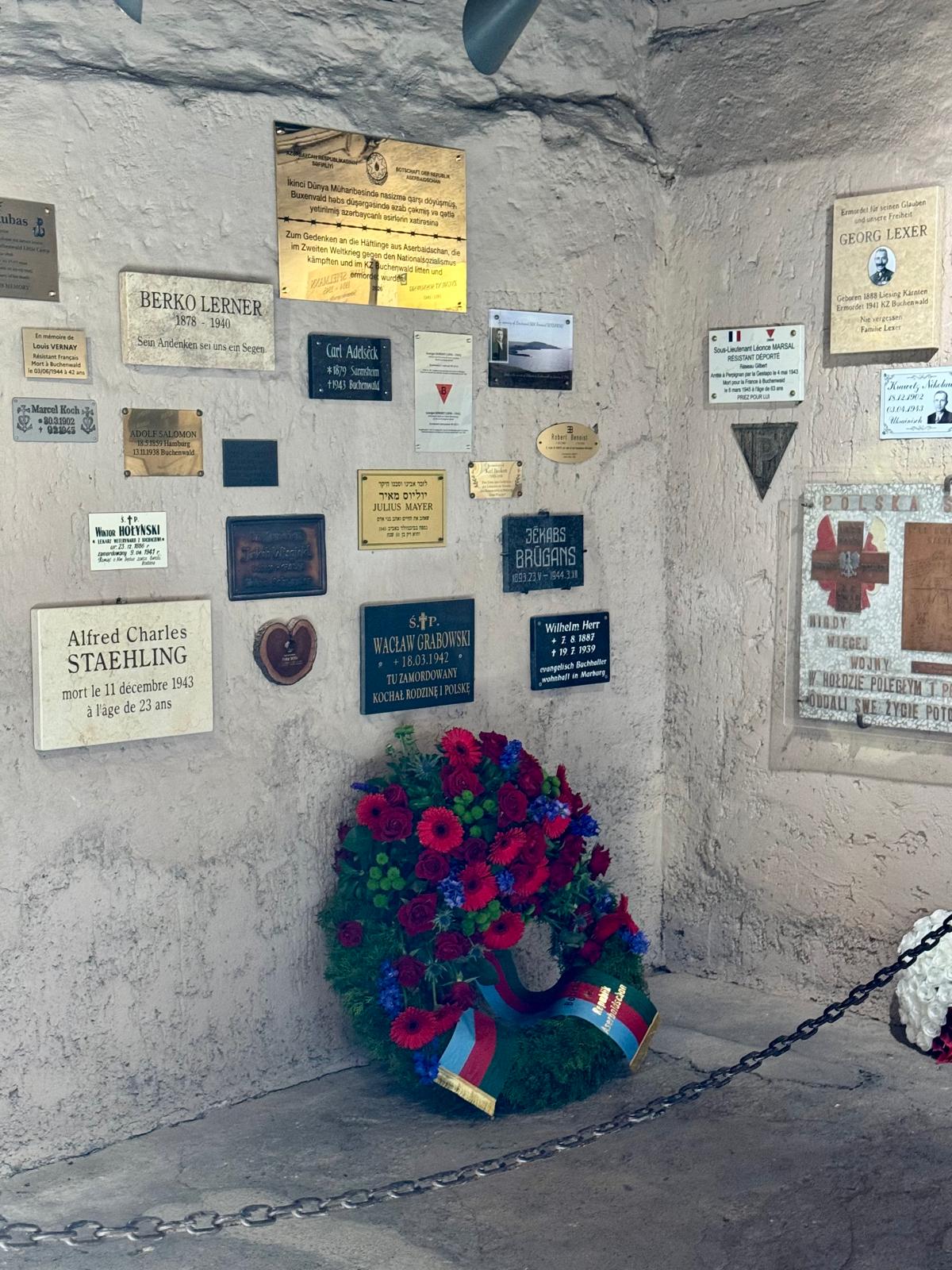
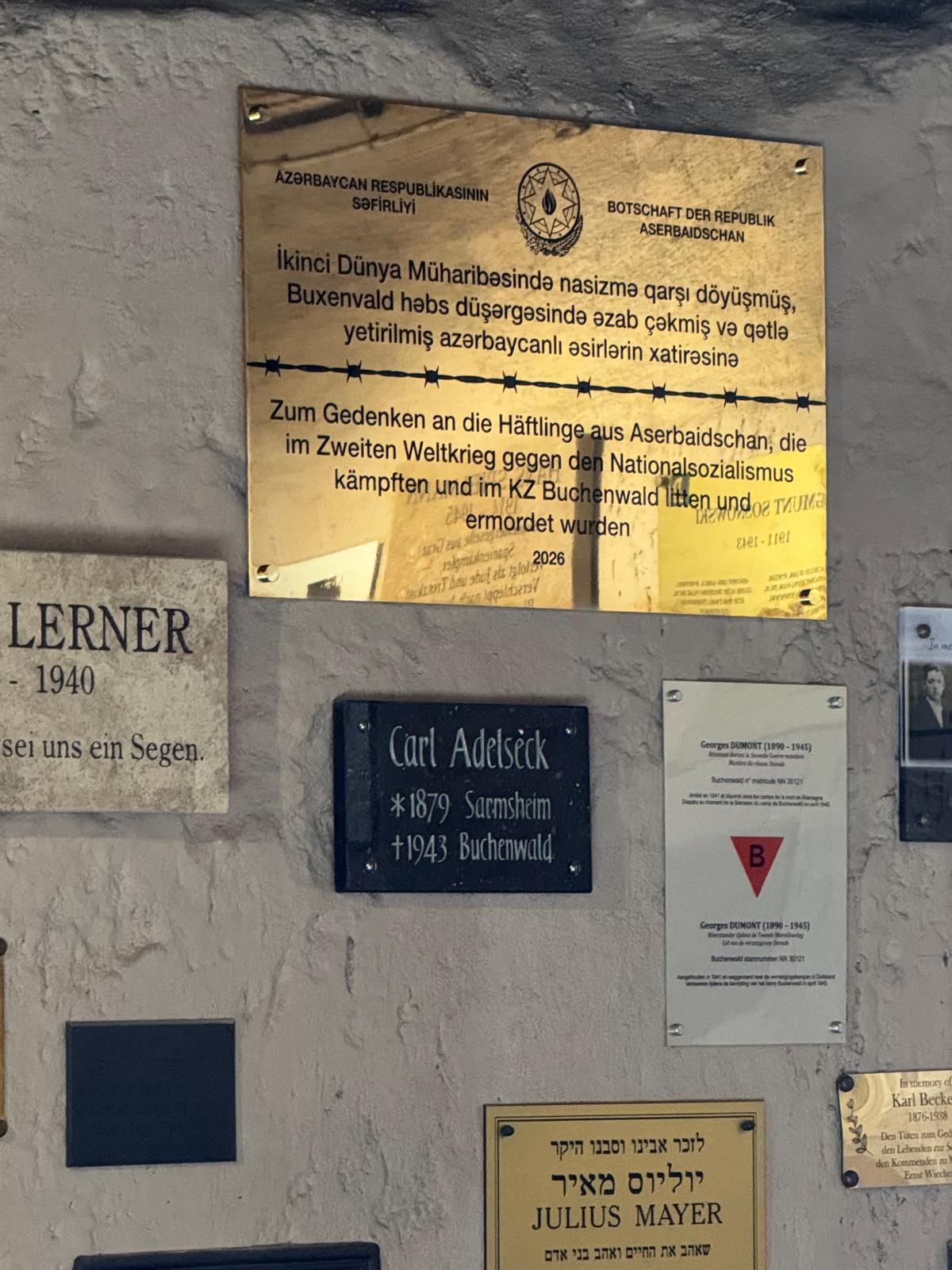
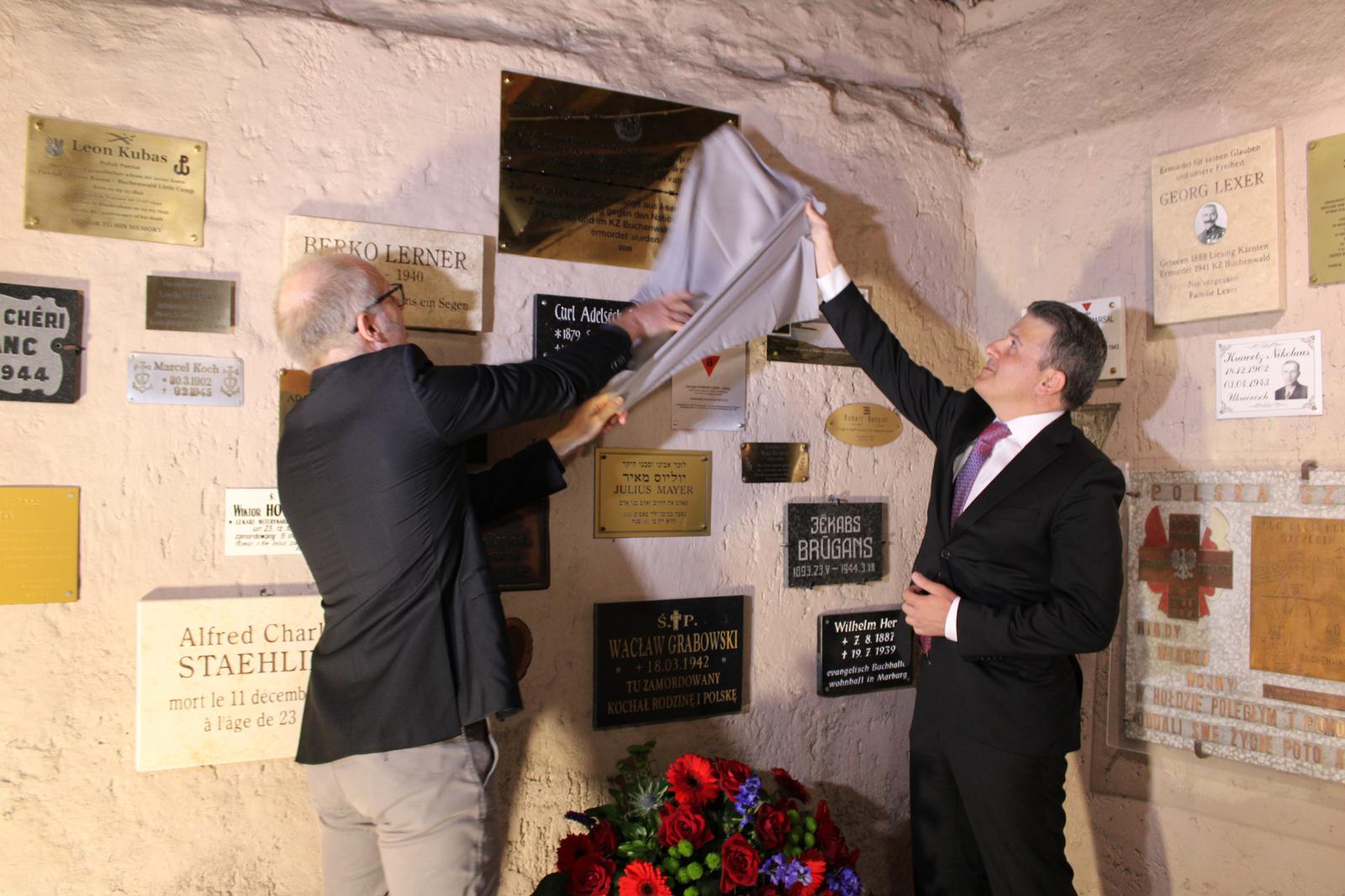
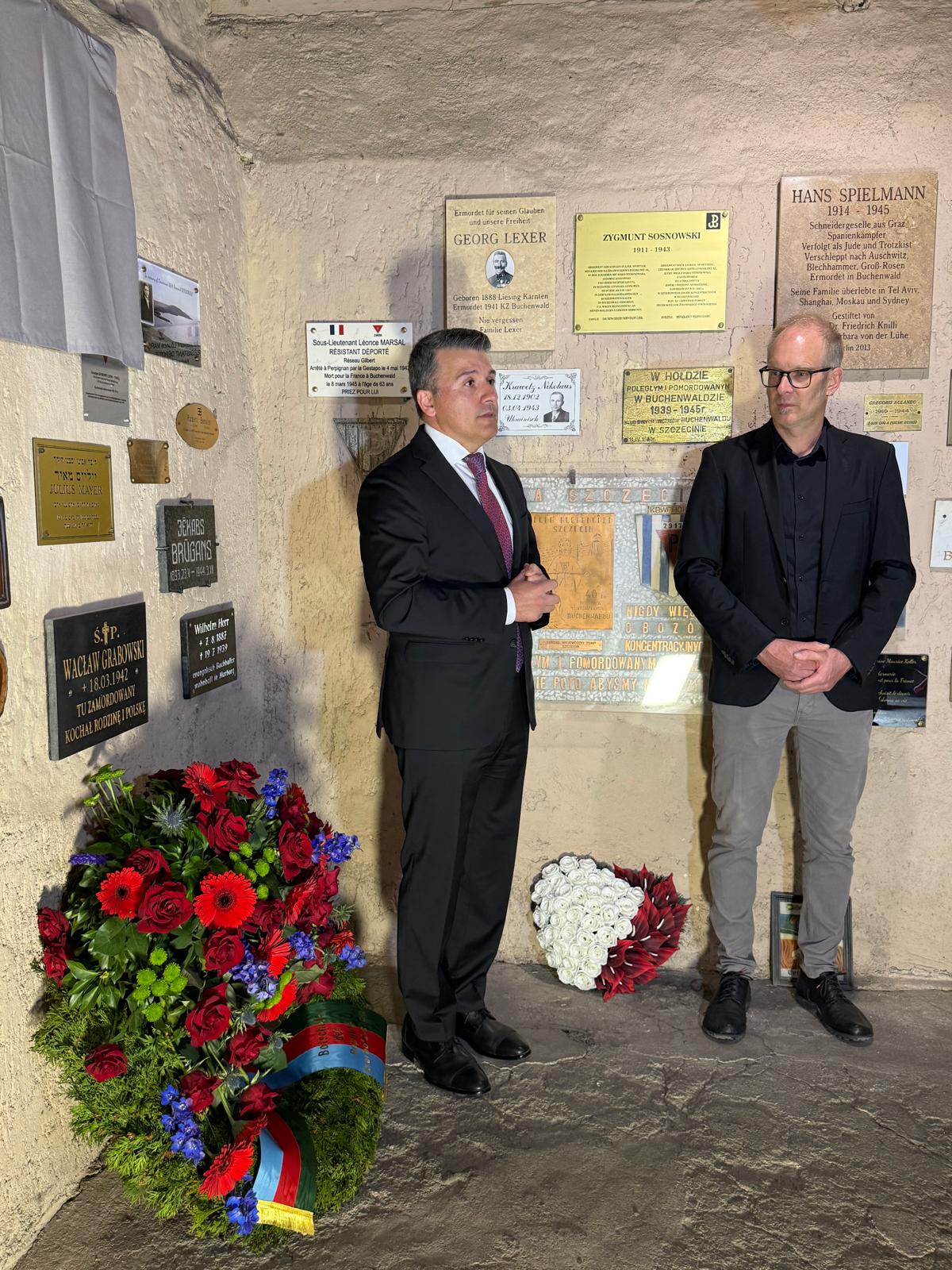
On May 5, 2026 a memorial plaque commemorating Azerbaijani prisoners of war who died there during the Second World War was unveiled at the former Buchenwald concentration camp.
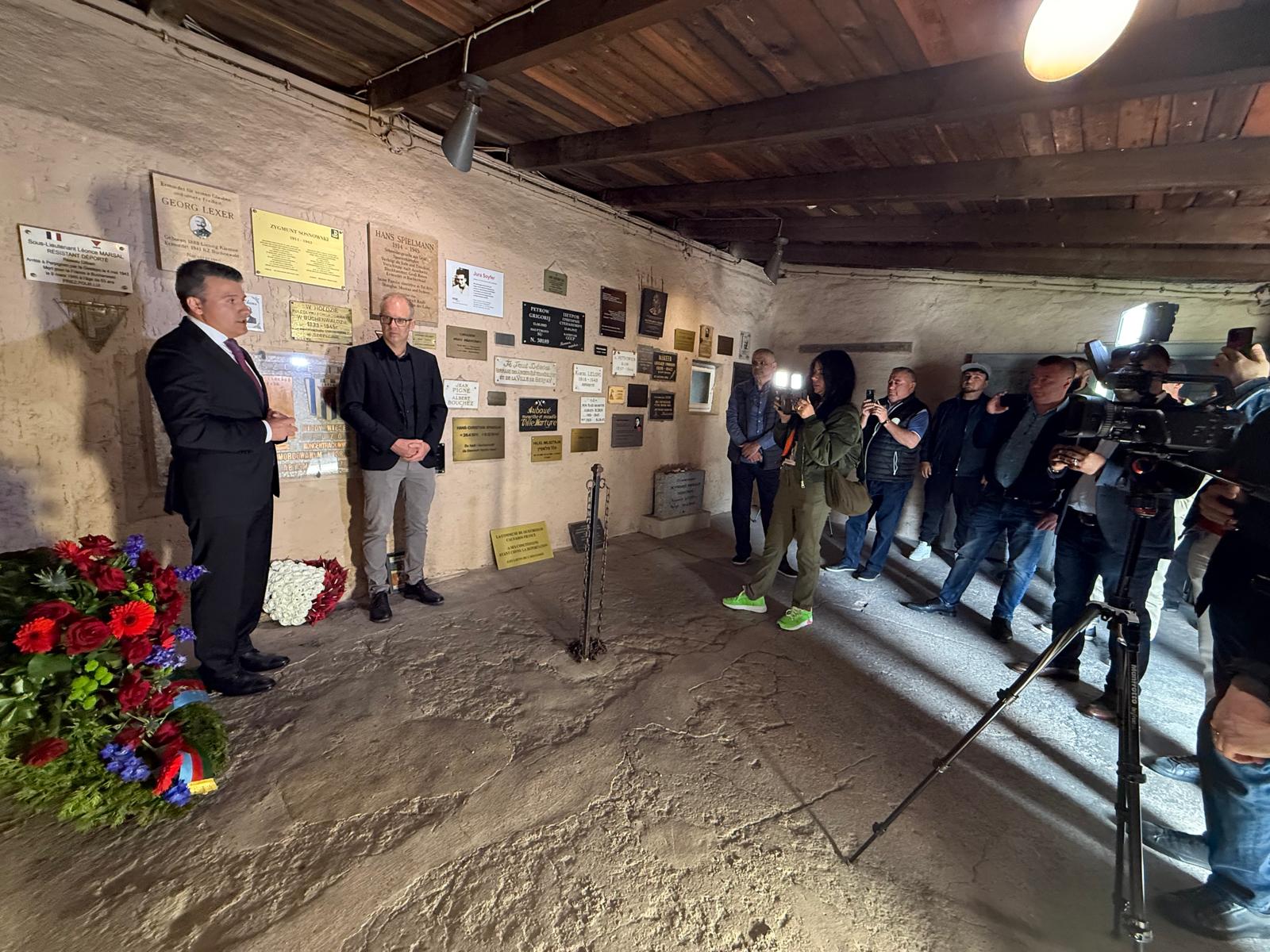
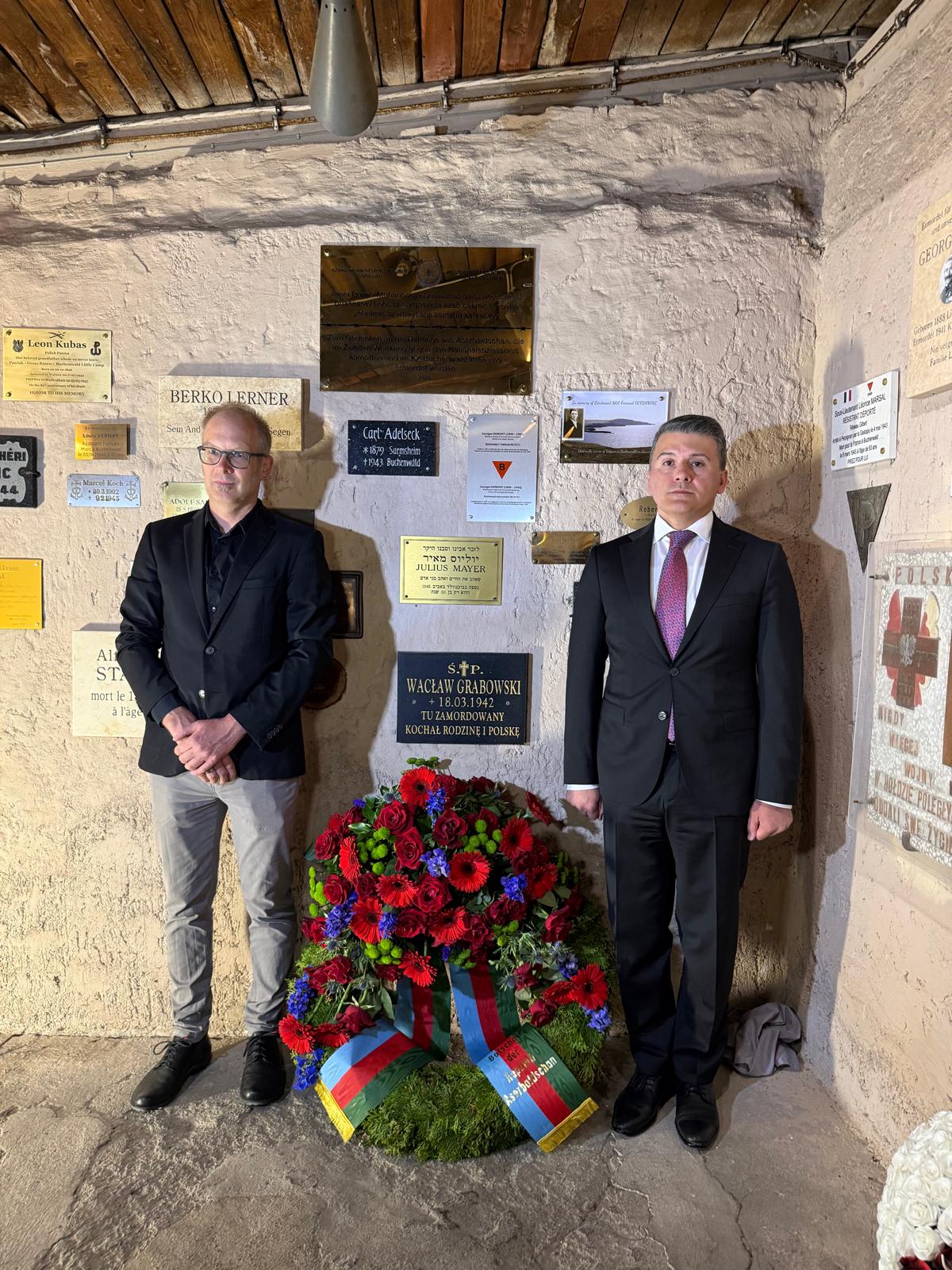
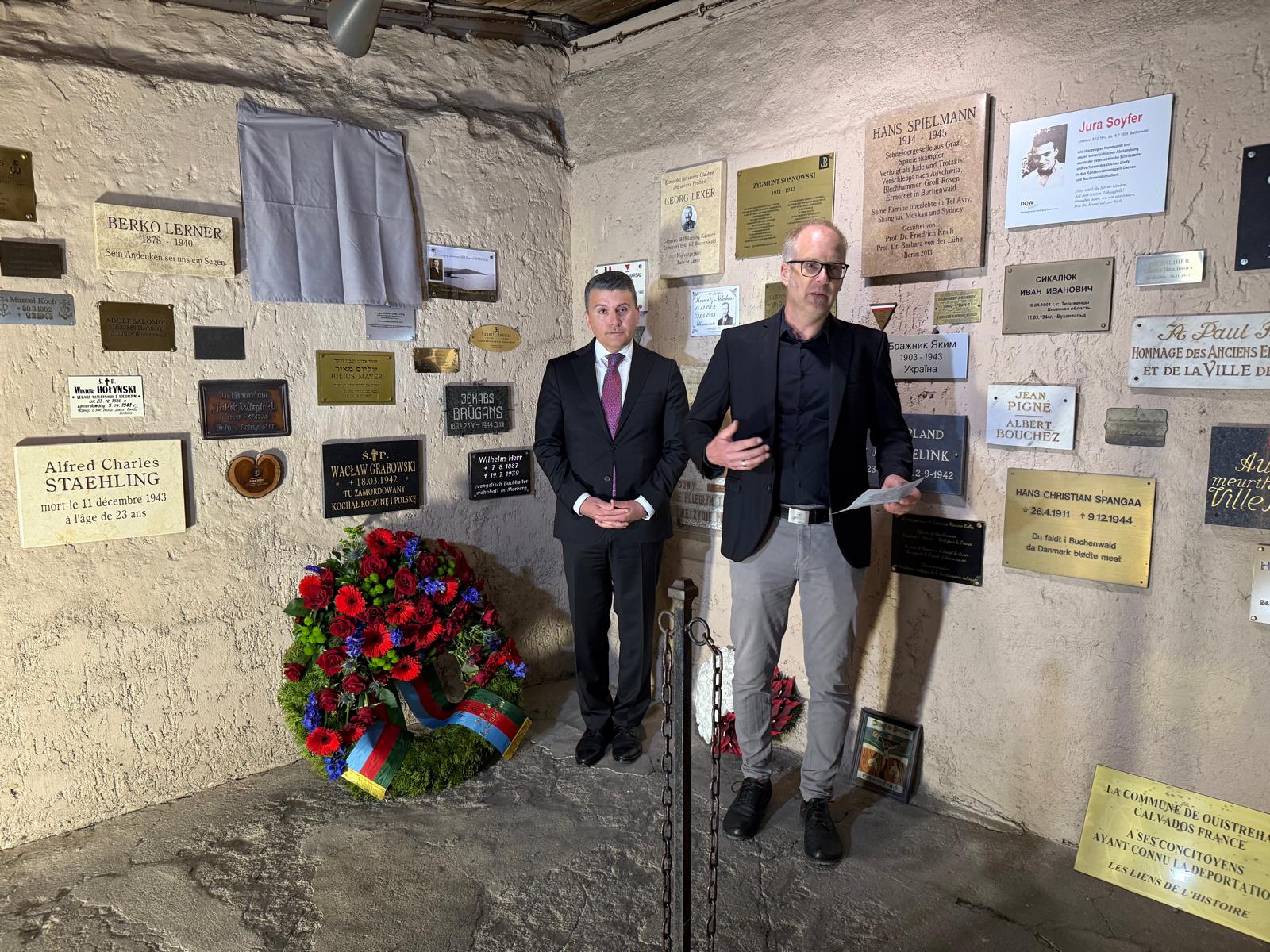
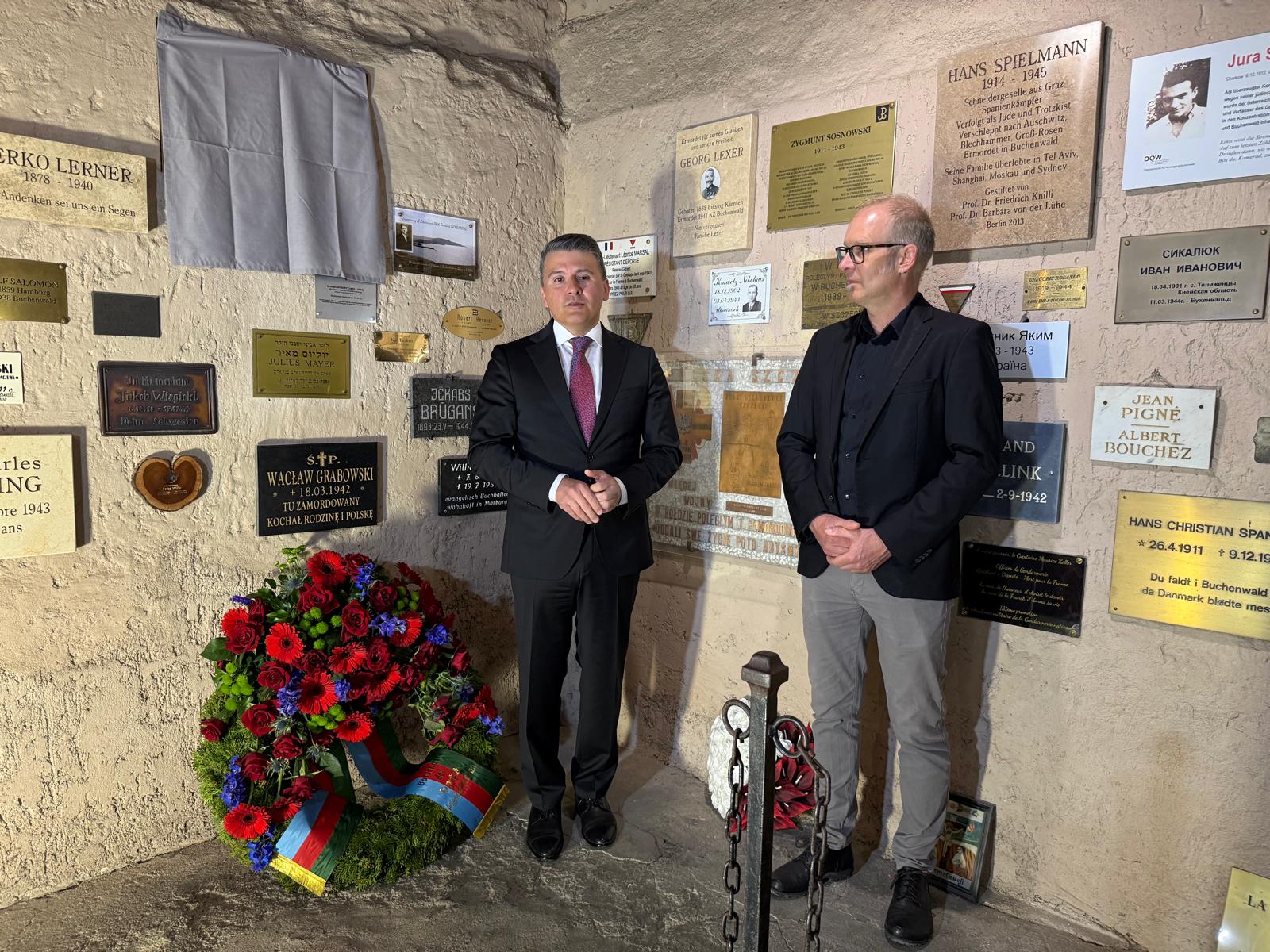
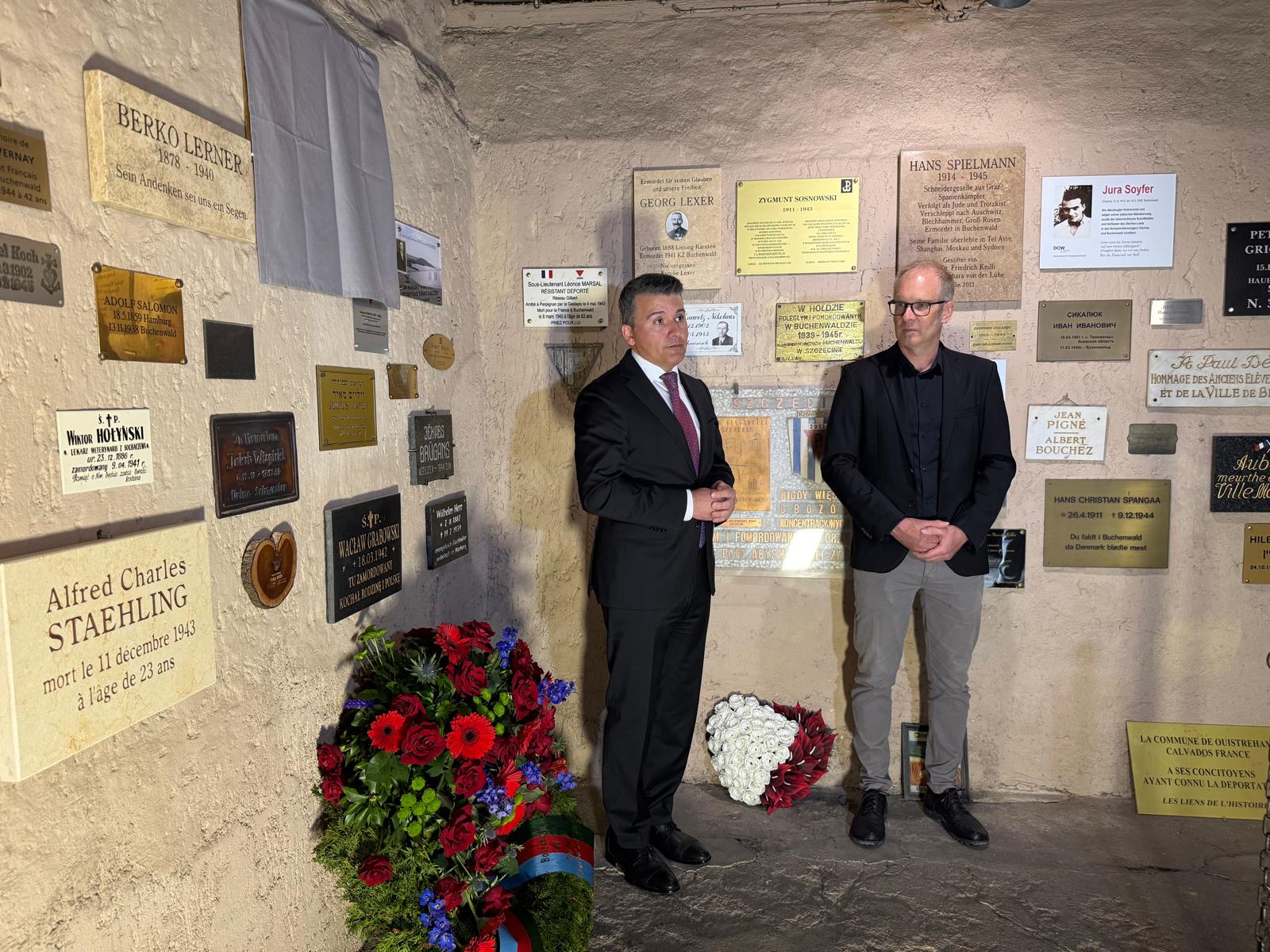
The bilingual memorial plaque was installed at the initiative of the Azerbaijani Embassy in Germany. The official ceremony took place on the grounds of the Buchenwald Memorial. Among those present were the Azerbaijani Ambassador to Germany, Nasimi Aghayev, the deputy director of the Buchenwald and Mittelbau-Dora Memorials Foundation, Philipp Neumann-Thein, as well as representatives of the Azerbaijani diaspora.
The initiative is intended to honor those Azerbaijanis who lost their lives in German prisoner-of-war and concentration camps. Following memorial plaques in Dachau Concentration Camp Memorial Site, Sachsenhausen Memorial and Museum, and Bergen-Belsen Memorial, this is already the fourth memorial plaque of its kind.
In his speech, Philipp Neumann-Thein emphasized the importance of remembrance culture and the historical examination of Nazi crimes. He stated that the new memorial plaque makes an important contribution to ensuring that the victims are not forgotten.
Ambassador Nasimi Aghayev emphasized that nearly 700,000 Azerbaijanis went to the front during the Second World War, and more than half lost their lives. He stressed that honoring those who perished in German camps is far more than an act of remembrance — it is a moral duty to preserve historical truth, uphold collective responsibility, and ensure that the horrors of war, hatred, and genocide are never repeated. Their memory, he noted, stands as a solemn reminder to future generations of the enduring importance of peace, human dignity, and the principle of “Never again.”
Following the speeches, the memorial plaque was unveiled and a wreath was laid.
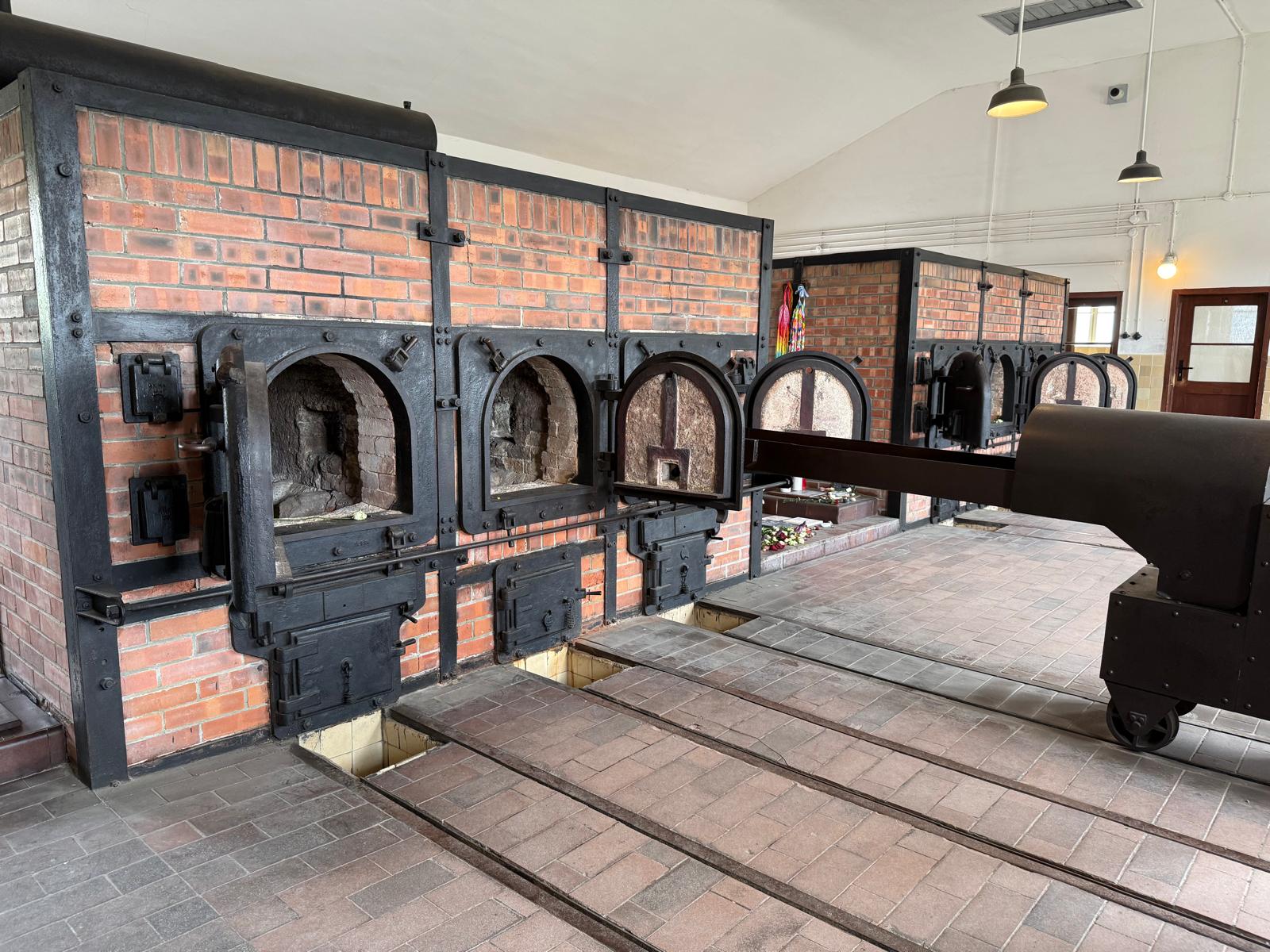
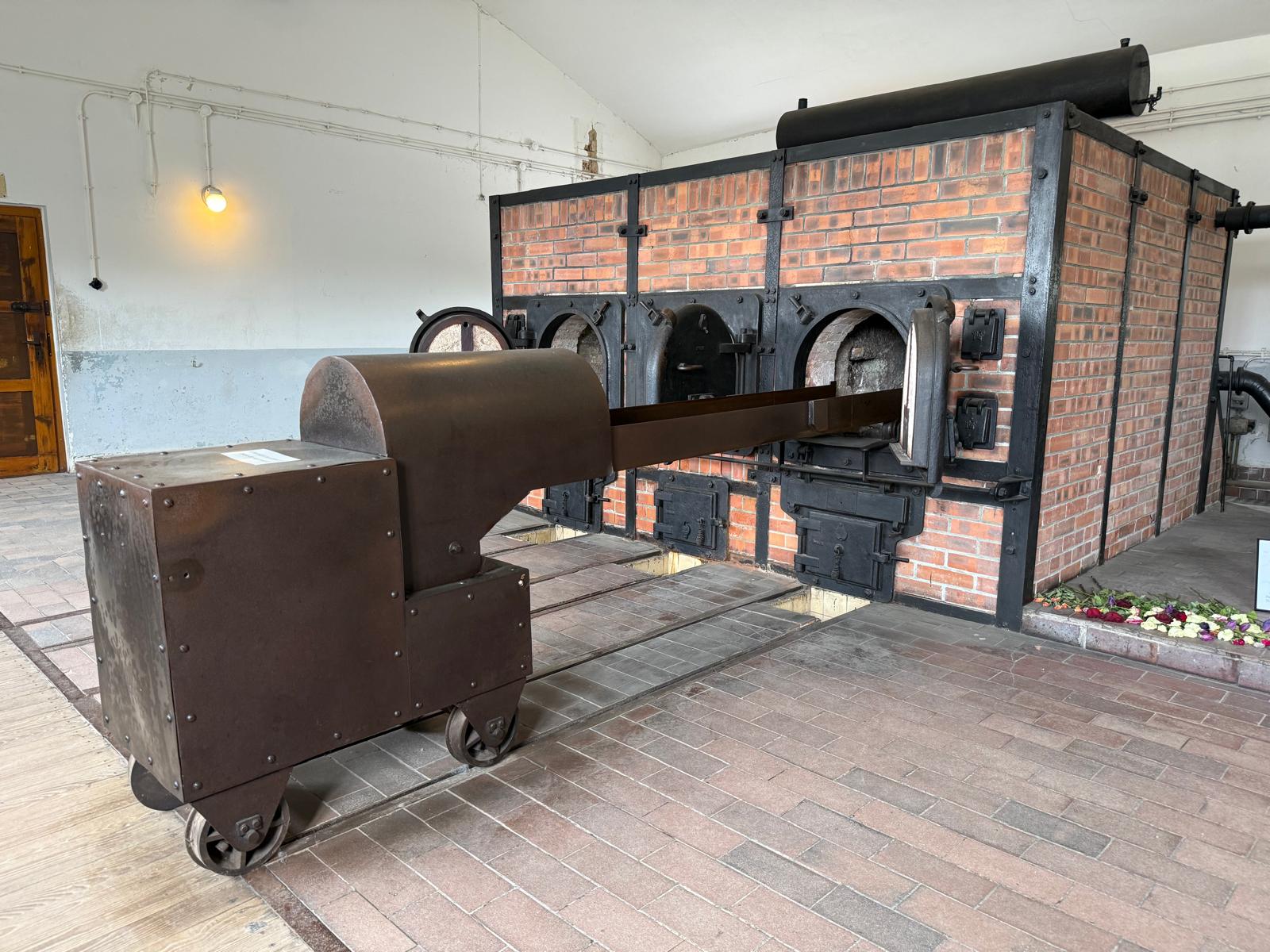
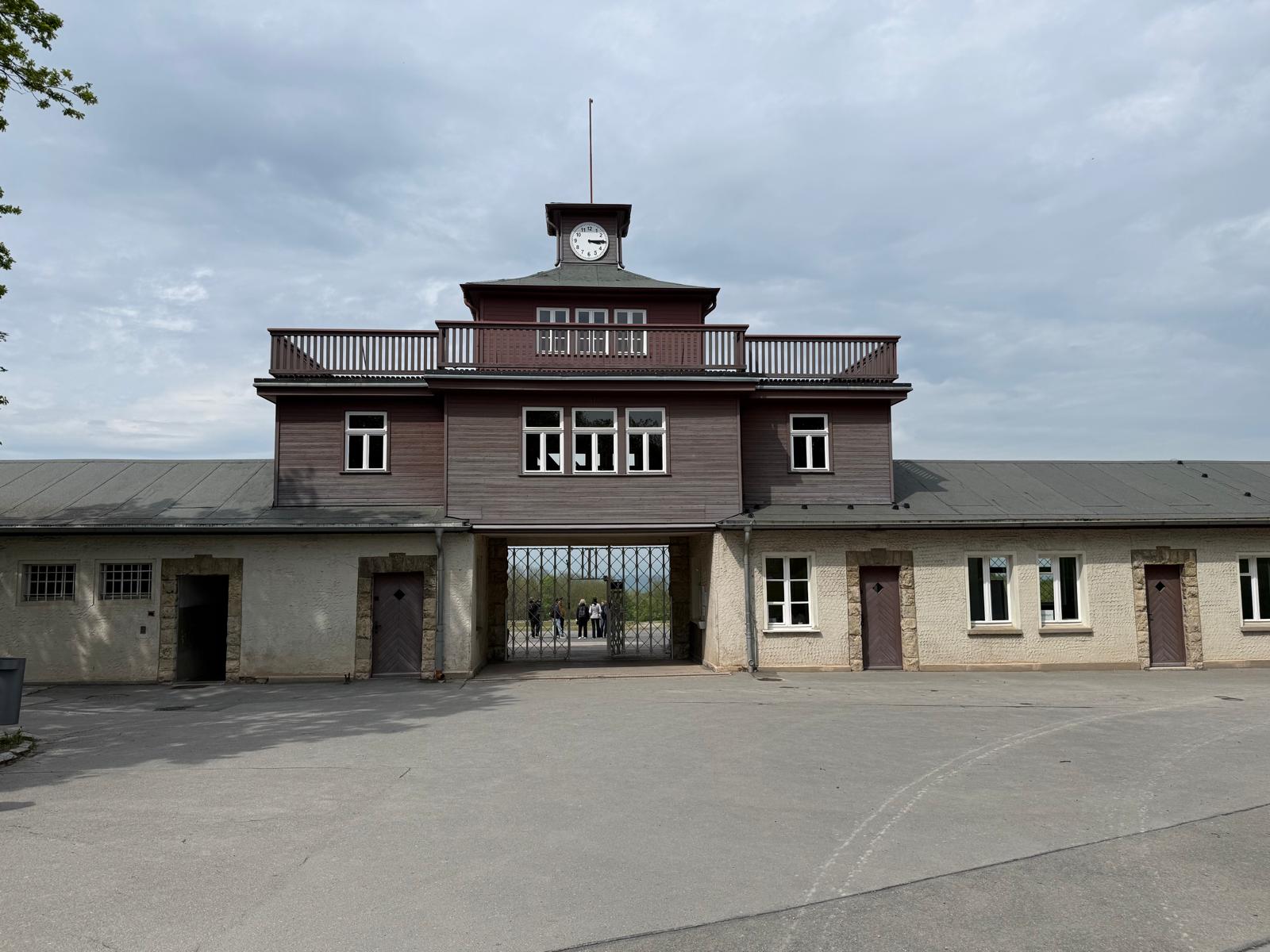
The former Buchenwald concentration camp, established near the city of Weimar in 1937, was one of the largest concentration camp complexes of the Nazi regime. Between 1937 and 1945, more than 280,000 people from across Europe were imprisoned there and in its subcamps, including political prisoners, Jews, Roma, and Soviet prisoners of war. Tens of thousands perished as a result of executions, disease, starvation, abuse, and forced labor.
Today, the Buchenwald Memorial is a central site of remembrance for the crimes of Nazism and receives around 500,000 visitors from all over the world each year.
A short video of the unveiling ceremony: https://www.youtube.com/watch?v=8mbTm-uOoko